Screen Printing vs. DTF vs. DTG: Which One is Right for Your Custom Apparel?
When you’re bringing a custom apparel project to life, one of the most important decisions you’ll make isn’t just the design—it’s how that design gets put onto the fabric.
With so many decorating technologies out there, it’s easy to get overwhelmed by the acronyms. Screen Printing, DTG (Direct to Garment), and DTF (Direct to Film) are the three heavy hitters in modern apparel decoration. Each has its own distinct superpower, but choosing the wrong one can lead to higher costs, stiff designs, or prints that fade faster than they should.
Let’s break down exactly how these methods work, their strengths, and when to choose each one for your next order with Slap Customs.
🏭 1. Screen Printing: The Undisputed Heavyweight Champion
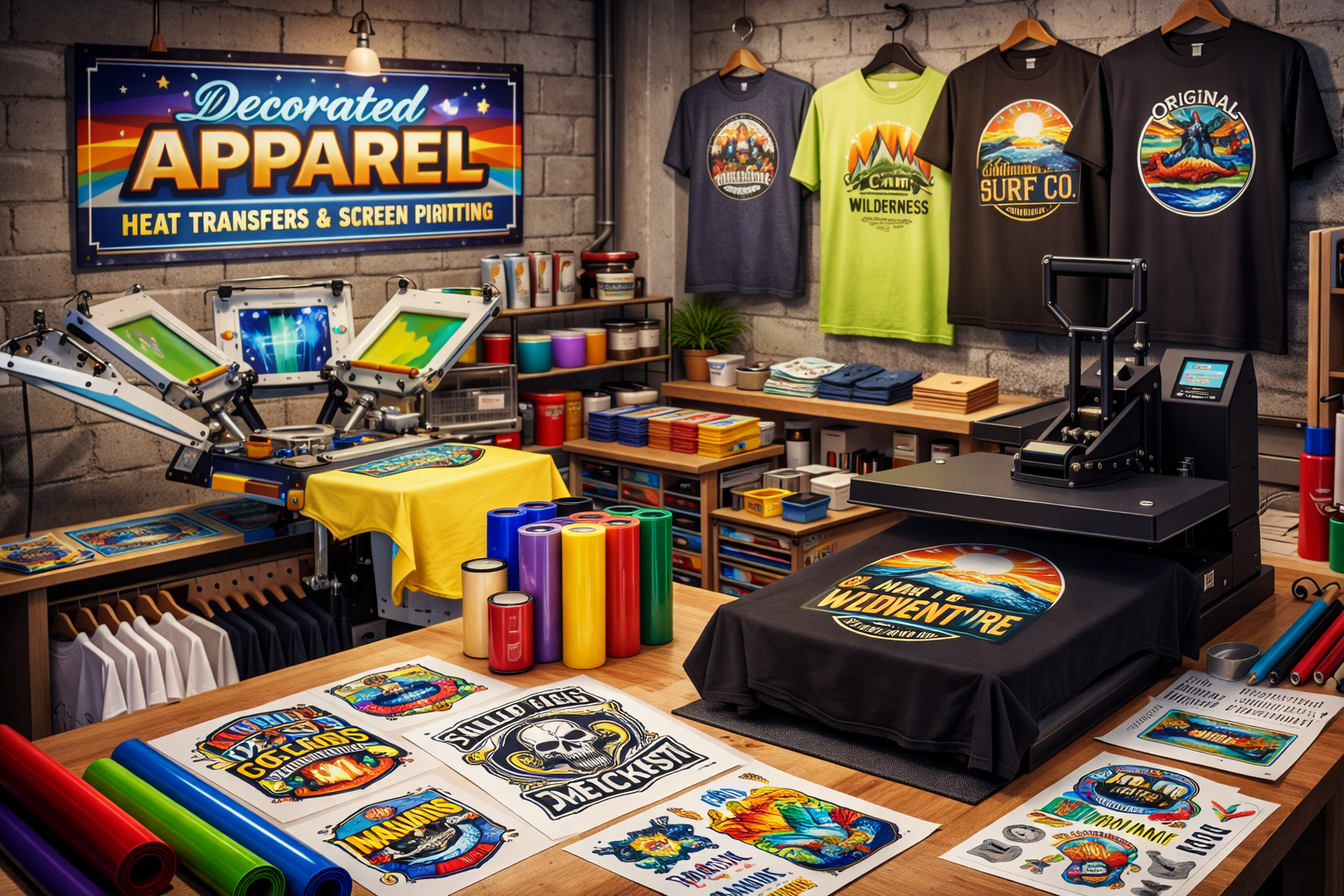
Screen printing is the traditional, battle-tested industry standard. It involves creating a physical stencil (or “screen”) for every color in your design and pushing thick ink directly through the mesh onto the garment.
How it feels:
Because screen printing uses specialized, high-opacity inks (like plastisol), it sits slightly on top of the fabric. It has a premium, durable texture, though large solid blocks of color can feel a bit heavy and less breathable.
- Ideal For: Large bulk orders (50+ units), simple designs, bold typography, and classic corporate or event wear.
- Fabric Compatibility: Works on almost any fabric (cotton, polyester, blends) with the right ink adjustments.
- Durability: Very High. Screen printing holds up for years and resists fading through countless washes.
When to use it: Use Screen Printing when you are ordering a high volume of garments with a simple color palette (1 to 4 colors). The setup cost is high because of the screens, but the unit price drops dramatically as your order size increases.
🎨 2. DTG (Direct to Garment): The Fine Art Specialist
Think of DTG as a giant, highly advanced inkjet printer for clothes. It sprays water-based inks directly onto your apparel (specifically soaking into natural fibers), allowing for incredibly high-detail printing.
How it feels:
Because the ink is absorbed directly into the fabric, DTG offers a incredibly soft, “no-feel” texture on 100% cotton.
- Ideal For: Photographic designs, complex colorful artwork, gradients, and ultra-small batch or one-off custom runs.
- Fabric Compatibility: Strictly 100% Cotton (or very high cotton blends). It struggles significantly with synthetic fabrics like polyester.
- Durability: Medium. It provides beautiful initial results, but water-based DTG inks can fade gradually over dozens of washes.
When to use it: Choose DTG if you have a highly detailed, colorful, photographic design and you only need a few shirts (1 to 12 units) printed on premium 100% cotton garments.
⚡ 3. DTF (Direct to Film): The Modern Game-Changer
DTF is the exciting new hybrid kid on the block. Instead of printing directly onto the shirt, your design is printed onto a special clear PET film using vibrant, stretch-resistant inks. A hot-melt adhesive powder is then applied, and the design is heat-pressed onto the garment.
How it feels:
DTF feels like a very thin, flexible, and smooth bonded layer on the garment. When pressed correctly, it is soft and moves with the fabric without cracking.
- Ideal For: Small-to-medium runs, vibrant full-color graphics, left-chest logos, and multi-fabric collections.
- Fabric Compatibility: Universal. Cotton, polyester, nylon, canvas, and performance synthetic blends.
- Durability: High. Excellent washability and exceptional stretch-resistance that won’t crack or peel easily.
When to use it: Choose DTF when you want vibrant, full-color, complex designs across a mix of different fabrics (such as a cotton tee and a polyester hoodie) in small-to-medium quantities.
📊 Quick Comparison: Screen Printing vs. DTG vs. DTF
| Feature | Screen Printing | DTG (Direct to Garment) | DTF (Direct to Film) |
| Best Order Size | Bulk (50+ units) | Ultra-low (1–15 units) | Small-to-Medium (1–100 units) |
| Design Complexity | Simple, bold, solid colors | High-detail, photographs, gradients | High-detail, vibrant full-color |
| Fabric Options | Most fabrics | 100% Cotton | Any fabric (Poly, Blends, Cotton) |
| Print Feel | Premium, slightly raised text | Extremely soft, integrated into fabric | Thin, flexible, smooth transfer layer |
| Setup Cost | High (per-screen setup) | None | Low to Moderate |
| Durability | Maximum (Indestructible) | Medium (Fades gracefully over time) | High (Stretchable, fade-resistant) |
🏆 Final Verdict: Which should you choose?
Selecting the perfect decoration method comes down to three quick questions:
- How many pieces are you ordering? If you need hundreds of shirts, Screen Printing will save you the most money. If you only need a handful, go with DTG or DTF.
- What fabric are you printing on? If you are customizing performance sportswear (polyester), DTF is your best bet. If you want ultra-soft premium cotton streetwear, DTG shines.
- What does your artwork look like? For clean, bold logos, choose Screen Printing. For full-color digital art, gradients, and multi-colored graphics, go with DTF or DTG.
Ready to bring your apparel project to life? Let our team at Slap Customs match your design with the perfect printing method for a flawless finish every time!
Leave a Reply