In an era driven by instant gratification and rapid technological shifts, the apparel decoration industry has seen its fair share of innovations. From Direct-to-Garment (DTG) to Direct-to-Film (DTF) transfers, the options for putting a logo on a t-shirt are vast. Yet, despite the rise of digital alternatives, one method remains the undeniable foundation of the merch world: Screen Printing.
At Slap Custom Printing, we work with all kinds of decoration methods, but screen printing continues to be the absolute staple of our industry. Here is a look at why this classic technique still holds the crown and exactly where it fits into the apparel decoration landscape.
The Ultimate Industry Staple
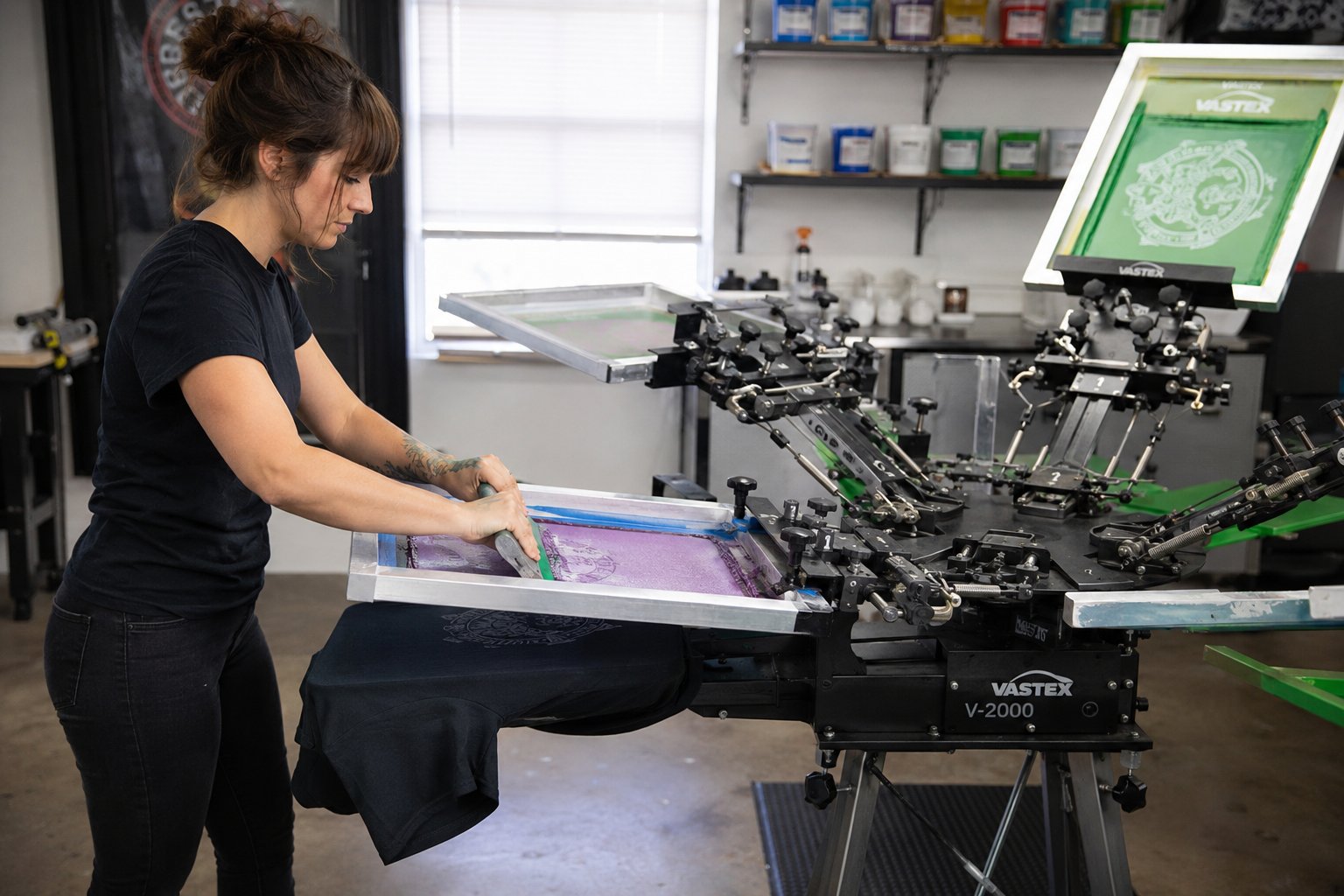
Screen printing isn’t just an old-school tradition; it’s a production powerhouse. The process—forcing premium plastisol or water-based inks through a woven mesh stencil onto fabric—creates a bond that digital printers simply cannot replicate.
There are three distinct reasons why screen printing remains the industry standard:
- Vibrancy and Opacity: Because screen printing lays down a physically thicker layer of ink compared to digital alternatives, the colors are exceptionally vibrant. If you are printing bright white or neon ink onto a pitch-black hoodie, screen printing ensures the design pops perfectly without the shirt color bleeding through.
- Unmatched Durability: A properly cured screen-printed shirt is built to last. The ink becomes part of the fabric, meaning the design can withstand hundreds of trips through the washing machine without cracking, peeling, or fading.
- The Economy of Scale: Screen printing requires a bit of upfront setup—burning screens, mixing inks, and aligning the press. However, once the press is dialed in, it moves fast. For bulk orders of 50, 500, or 5,000 shirts, nothing beats screen printing on cost-per-unit.
Where Screen Printing Fits in the Modern Merch Landscape
Every decorating method has its sweet spot. To understand where screen printing fits, it helps to look at the three main pillars of the modern apparel decoration business:
1. High-Volume Bulk Orders (The Screen Printing Sweet Spot)
When local businesses need staff uniforms, schools need spirit wear, or bands need tour merchandise, screen printing is the automatic choice. It delivers the highest quality finish at the most budget-friendly price point for bulk quantities.
2. Complex, Low-Quantity Digital Prints (DTG & DTF)
If a customer comes in wanting a single t-shirt featuring a highly detailed, full-color family photograph, digital options like DTG or DTF shine. Digital printing bypasses the screen setup process entirely, making it perfect for hyper-detailed, low-quantity orders where exact color matching across hundreds of garments isn’t the priority.
3. Corporate & Premium Wear (Embroidery)
For items like polo shirts, winter jackets, and baseball caps, embroidery takes over. It provides a textured, high-end look that is ideal for corporate boardrooms and professional settings, whereas screen printing dominates the streetwear, casual wear, and event merchandise sectors.
The Verdict
The apparel decoration business is all about choosing the right tool for the job. While digital tools have carved out a fantastic niche for one-offs and complex photographic prints, screen printing remains the backbone of the custom apparel world. It offers a level of retail-quality texture, vivid color, and rugged durability that defines what great custom apparel should feel like.
Planning your next big merchandise run, company event, or clothing line launch? Slap Customs has the presses prepped and the ink ready to bring your vision to life with the lasting power of screen printing.
Resources:
DTF Center Forum-Your questions, their expertise: Bridging the DTF community one answer at a time
Signs101-Community dedicated to the sign and apparel industry